


.png)


Articles



Startup: Everything Changes and Nothing Stands Still
In a recent episode of the "Economics Out Loud" podcast, two NES graduates, Tamara Orlova, CFO at Flo Health (mobile app for women based on a menstrual cycle tracker), and Ekaterina Pranitskaya, Head of Product at Superdao (platform for start and manage decentralized autonomous organizations), talked about their personal experience.

The Impact of Social Capital and Conformity on Self-Isolation Levels during Pandemic
We continue to share with our readers the most interesting, according to NES professors, graduation theses of NES students. Anastasia Khromenko from the NES-HSE Joint Bachelor of Arts in Economics Program, who had Professor Shlomo Weber as her academic adviser, talks about her research.
The Professional Passions of Research Economists
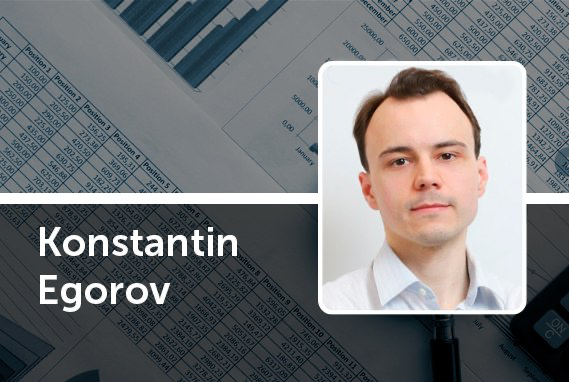
In this column, NES graduate Konstantin Egorov writes about the work of academic economists. Dispelling the stereotypes, he shows that it is an extremely interesting job that can benefit from a broad knowledge base and a range of skills.

What Does the History of Defaults Teach Us?
In an episode of the “Economics Out Loud” podcast, NES Vice-Rector Maxim Bouev discussed with the podcast editor Philip Sterkin a recently announced default of Russia, which he considers a unique event. Why is the government doing the right thing by trying to pay off its debt? How has the debt structure changed over the course of history? What can be the impact of a default on the economy? Below, we share the main ideas of the episode.

How to Analyze and Resolve Conflicts with the Help of Games?
Can game theory help in negotiations and resolution of interstate conflicts? How has regulation based on the Prisoner's Dilemma contributed to the fight against cartels in Europe? Why is it important to take into consideration future interactions for the game’s outcome? These and other questions were discussed in a recent episode of the "Economics Out Loud" podcast with NES Professor Sergei Izmalkov. GURU shares a summary of the episode.

How Can Language Policy Affect Economics?
In a recent episode of the “Economics Out Loud” podcast, President and Professor of the New Economic School Shlomo Weber talked about the interconnections between economics and language. How does language influence thinking? What does linguistic diversity bring? Why is economic policy important? We are sharing answers to these and other questions.

What Investing Mistakes People Make During a Crisis?
We devoted a recent episode of the "Economics Out Loud" podcast to personal finance, markets, and the approaching storm. NES graduate and professor at Michigan State University Dmitriy Muravyev talked about the future of the economy, inflation, and how an investor should behave in a crisis.

Should Politicians Control Civil Servants?
In his column for GURU, NES Professor Michele Valsecchi tells about his current research.

AEJ Best Paper Awards: Comment by NES Professor Gerhard Toews
American Economic Association has announced its list of the 2022 American Economic Journal Best Paper Awards. The papers are selected in four fields: Applied Economics, Economic Policy, Macroeconomics and Microeconomics. We continue to publish commentaries of the NES professors to selected papers from the list. Following is the commentary by Professor Gerhard Toews to the winning paper in economic policy “Carbon Taxes and CO2 Emissions: Sweden as a Case Study” by Julius J. Andersson. American Economic Journal: Economic Policy, Volume 11, No. 4, November 2019
AEJ Best Paper Awards: Comment by NES Professor Sergei Izmalkov
The American Economic Association has announced its list of the 2022 American Economic Journal Best Paper Awards. The papers are selected in four fields: Applied Economics, Economic Policy, Macroeconomics and Microeconomics. We publish commentaries of the NES professors to selected papers from the list. Following is the commentary of Professor Sergei Izmalkov to the winning paper in microeconomics "Is No News (Perceived As) Bad News? An Experimental Investigation of Information Disclosure" by Ginger Zhe Jin, Michael Luca, and Daniel Martin.

Why Competition Is So Weak in Digital Markets: Massimo Motta Lecture Notes
Why is the influence of Google, Apple, Facebook, Amazon and Microsoft so great? Can traditional antitrust policy deal with them? Why are users at risk? Massimo Motta, Research Professor at ICREA-Universitat Pompeu Fabra and at the Barcelona Graduate School of Economics, former Chief Competition Economist of the European Commission, explained in his lecture the key features of today's digital markets. A video of the lecture and the professor’s presentation are available here.

Key Interest Rate Is No Magic Wand
NES Professor Oleg Shibanov spoke in the “Economics Out Loud” podcast about how a central bank can support the economy. Can it accelerate economic growth? When it raises key interest rate – what does it mean? What are the consequences of freezing reserves? We are sharing the main takeaways of the talk.
Вопрос-ответ
Что можно найти в разделе «Статьи» на GURU?
В разделе «Статьи» собраны научно-популярные материалы об экономике, финансах, обществе, технологиях, образовании, рынке труда и экономической политике. Материалы помогают разобраться в сложных темах простым языком и увидеть, как экономические процессы связаны с повседневной жизнью, бизнесом и государственными решениями. Другие форматы материалов доступны в разделе «Подкасты» и «Диалоги».
Кому будут полезны статьи GURU?
Статьи будут полезны студентам, абитуриентам, специалистам, предпринимателям, инвесторам и всем, кто хочет лучше понимать экономику без чтения академических текстов. Материалы подходят для самостоятельного изучения экономики, финансов, рынка труда и общественных процессов. Для тех, кто выбирает профессиональный путь, дополнительно может быть полезен раздел «Карьера».
Какие темы чаще всего разбираются в статьях?
В статьях GURU разбираются макроэкономика, инфляция, финансовые рынки, инвестиции, поведенческая экономика, неравенство, демография, рынок труда, международная торговля, искусственный интеллект, цифровая экономика, образование и карьерные траектории. Если в материале встречаются сложные понятия, их можно дополнительно проверить в экономическом словаре или финансовом словаре.
Можно ли читать статьи без экономического образования?
Да, материалы написаны в научно-популярном формате и рассчитаны на широкую аудиторию. В статьях сложные экономические идеи объясняются через примеры, исследования, данные и понятные жизненные ситуации. Для закрепления базовых терминов можно использовать экономический словарь GURU.
Чем статьи GURU отличаются от новостей?
Статьи GURU не просто пересказывают новости, а объясняют причины, последствия и экономические механизмы событий. В материалах разбирается, почему происходят изменения в экономике, как они влияют на людей, компании и рынки, а также какие выводы можно сделать на основе исследований и экспертных комментариев. Аудиоверсии и обсуждения смежных тем можно найти в разделе «Подкасты».
Есть ли в разделе статьи про финансы и инвестиции?
Да, в разделе публикуются материалы о личных финансах, инвестициях, финансовом поведении, рисках, банках, кредитах, инфляции и финансовых рынках. Такие статьи помогают лучше понимать, как устроены финансовые решения и какие факторы влияют на экономику домохозяйств, бизнеса и государства. Для терминов по этой теме можно использовать финансовый словарь.
Подходят ли статьи студентам и абитуриентам?
Да, статьи могут быть полезны студентам и абитуриентам, которые интересуются экономикой, финансами, аналитикой, бизнесом и карьерой. Материалы помогают понять, какие вопросы изучает современная экономика и как экономическое мышление применяется в реальной жизни. Для выбора профессионального направления можно дополнительно посмотреть раздел «Карьера» и карту профессий РЭШ.
Можно ли использовать статьи для самообразования?
Да, статьи GURU подходят для самостоятельного изучения экономики и финансов. Их можно читать как отдельные материалы или объединять в тематические подборки: например, по инфляции, рынку труда, экономическому росту, финансовой грамотности или искусственному интеллекту. Дополнительно для самообразования можно использовать раздел «Книжная полка».
Кто готовит материалы для раздела «Статьи»?
Материалы GURU создаются с опорой на экспертизу Российской экономической школы, исследования, данные и комментарии специалистов. В статьях часто используются объяснения экономистов, преподавателей, исследователей и экспертов из разных сфер. Больше экспертных обсуждений можно найти в разделе «Диалоги».
Почему стоит читать статьи GURU?
Статьи GURU помогают понимать экономику глубже: не только узнавать факты, но и видеть связи между рынками, государственными решениями, технологиями, поведением людей и долгосрочными изменениями в обществе. Это удобный формат для тех, кто хочет развивать экономическое мышление и разбираться в сложных темах на понятном языке. Для расширения кругозора можно также использовать «Подборки по темам» и «Книжную полку».