


.png)


Articles



How GURU and NES Gave ChatGPT an Exam
GURU editors and NES Professor Olga Kuzmina decided to test ChatGPT's knowledge of economics. The results of the experiment are available here. And for those who would like to learn all the details, we have written the article below.

How Сan We Improve the Quality of Justice?
The judiciary acts as a critical check over the other two branches of government – legislative and executive. This, however, can only be secured by its independence. How can this be achieved in countries without strong and well-established democratic institutions? According to NES Professor Sultan Mehmood, the first step should be the establishment of a proper system of the selection and appointment of judges. In a column for GURU, he talks about the centuries-long dispute about different approaches to select judges. He then provides evidence that uses a unique natural experiment to bring to bear the answer to the question of judicial selection.

The "Panic of 1825" as a Model of Financial Crises
The boom of financial and technological innovations, market euphoria and bubbles, the explosive growth of financial intermediaries, rising raw materials prices and blind investor trust instantly turned into panic. This is not a description of the dot-com crisis or the global financial crisis of 2008, but of the events that took place 200 years ago. The crisis of 1825 became a template for future shocks and at the same time led to changes in monetary policy and regulation that are still in place today.
This is the first article, opening a series of texts about economic and financial crises – their causes, consequences and the lessons that we should learn from them. From these articles on GURU, you will learn the history of capitalism – how it got sick and how it recovered.
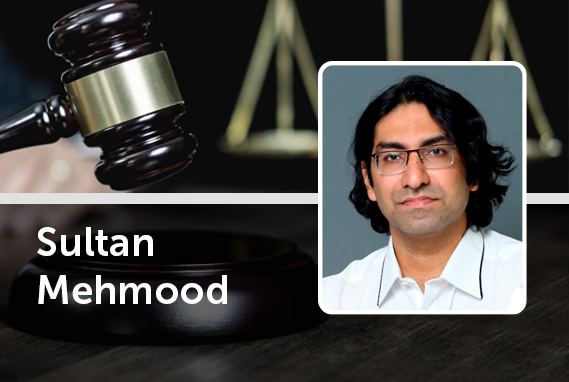
Quality of Justice: Impact of Religious Rituals on Court Decisions
How can the quality of judges’ decisions be improved and what factors influence them? NES Professor Sultan Mehmood suggests an unusual answer to this topical question. Together with co-authors Avner Seror (Aix-Marseille School of Economics) and Daniel L. Chen (Toulouse School of Economics), he examined millions of cases and thousands of judges across the Muslim world to show the effect of Ramadan observance, one of the major rituals in Muslim countries, on judicial decisions. The quantitative analysis concludes that Ramadan observance, that is associated with austerity in food and drink, paradoxically, makes judges more lenient. In this column for GURU, Sultan Mehmood talks about this paper.

How to Avoid Eye Tricks in Statistics?
We often find surprising coincidences in statistics, for example, the correlation between the US budget expenditure on science and the number of people committing suicide by hanging themselves, or between movies with Nicolas Cage and the number of people that drown in pools. There is nothing mystical in this. Assistant Professor of Economics at the Duke University and NES graduate Anna Bykhovskaya explained in a new episode of the "Economics out Loud" podcast where these senseless correlations come from and how to avoid them. She also talked about the capabilities of models designed by economists and cases when models become useless. GURU shares a summary of the episode.

How Often Do Economies Enter Inflationary Spirals?
2021 and 2022 turned into a true inflationary shock for the world economy. Developed countries have not seen such a spike in prices since the 1980s. At the same time, the situation on the labor market was changing: the economies were recovering after the Covid pandemic, the demand for labor was growing, but supply was falling behind, which contributed to the growth of wages.

Choosing a Job: Startups vs Corporations
What is a better place to start a career – a startup or a corporation? What opportunities does each of the options open up to a junior specialist and will greater risks bring greater rewards? Four NES graduates, Dzhangir Dzhangirov (Senior Vice President, Sberbank), Nadia Kotova (Economist, LinkedIn), Dmitry Matskevich (entrepreneur, CEO and Co-Founder, DBrain) and Irina Nazarova (CEO, Evil Martians), compared the two career tracks during NES Popular Science Days. The main points of the discussion follow below.
How Can Academia and Industry Benefit Each Other?
In a crisis, fundamental education becomes a protective asset, because it provides knowledge and tools that expand choice and help to withstand uncertainty. Recently, one of the sessions during NES Popular Science Days in memory of Gur Ofer was devoted to the interaction between universities and employers representing business. Here we publish the summarized ideas presented by the speakers: Anton Suvorov, NES Professor and Rector; Andrey Raigorodsky, Dean of the Phystech School of Applied Mathematics and Computer Science; Maria Bogomolova, Partner, Leader of the strategic HR agenda of "Technologies of Trust"; and Andrey Skorochkin, CEO of Reksoft Consulting.

What Makes Oil Price Forecasting Similar to Billiards?
There is a saying that economists are trying to predict oil price movements so that meteorologists do not feel ashamed of their work. However, there is a grain of truth in this joke. NES visiting professor Alexander Malanichev who has been studying commodity prices for 30 years, talks about forecasting methods, accuracy of forecasts and ways to improve it. Spoiler: the most important thing is to consider fundamental factors and to listen to the market signals.

The Lessons of the 1970s Help the World in the 2020
The world is experiencing "the first truly global energy crisis," International Energy Agency Executive Director Fatih Birol said on the release day of the new episode of the "Economics out Loud" podcast with NES Visiting Professor Alexander Malanichev. By coincidence, he talked about the current energy crisis. There are many similarities between the shocks of the 1970s and the present day. For example, expensive oil and gas have become fuel for accelerating inflation. The rise in energy prices is fueled by political confrontation. Finally, Western economies again intend to come out of the crisis renewed and with smaller dependence on former suppliers and non-renewable energy sources in general.
What will Europe face this winter? How will the oil and gas markets change? Will the West manage to deprive Russia of at least part of the petrodollars, and will Russia manage to redirect its oil and gas exports from Europe to Asia? What lessons can we learn from the 1970s? These questions were discussed in the podcast.

Will China Become a Window to the World Economy for Russia?
Over the past decade, the role of China in Russia’s foreign trade has grown significantly and now, most likely, it will become the country’s main trade partner, boasting a large margin from other countries, NES Professor and Director of the Center for Economic and Financial Research Natalya Volchkova says. It is China's stance that will largely determine Russia's life under sanctions, and at the same time, it can become a window to the world economy. The main takeaways from the "Economics out Loud" podcast with Natalya Volchkova follow below.

The Crooked Path of Central Banks
Who Killed the Phillips Curve? is the name of a paper by the US Fed's economists. The IMF, central banks and leading macroeconomists are all trying to understand what has happened to it and their interest is not theoretical at all. The answer to this question determines quite a lot, in particular, how much central banks should tighten their policy in order to curb inflation that has broken out of control.
Вопрос-ответ
Что можно найти в разделе «Статьи» на GURU?
В разделе «Статьи» собраны научно-популярные материалы об экономике, финансах, обществе, технологиях, образовании, рынке труда и экономической политике. Материалы помогают разобраться в сложных темах простым языком и увидеть, как экономические процессы связаны с повседневной жизнью, бизнесом и государственными решениями. Другие форматы материалов доступны в разделе «Подкасты» и «Диалоги».
Кому будут полезны статьи GURU?
Статьи будут полезны студентам, абитуриентам, специалистам, предпринимателям, инвесторам и всем, кто хочет лучше понимать экономику без чтения академических текстов. Материалы подходят для самостоятельного изучения экономики, финансов, рынка труда и общественных процессов. Для тех, кто выбирает профессиональный путь, дополнительно может быть полезен раздел «Карьера».
Какие темы чаще всего разбираются в статьях?
В статьях GURU разбираются макроэкономика, инфляция, финансовые рынки, инвестиции, поведенческая экономика, неравенство, демография, рынок труда, международная торговля, искусственный интеллект, цифровая экономика, образование и карьерные траектории. Если в материале встречаются сложные понятия, их можно дополнительно проверить в экономическом словаре или финансовом словаре.
Можно ли читать статьи без экономического образования?
Да, материалы написаны в научно-популярном формате и рассчитаны на широкую аудиторию. В статьях сложные экономические идеи объясняются через примеры, исследования, данные и понятные жизненные ситуации. Для закрепления базовых терминов можно использовать экономический словарь GURU.
Чем статьи GURU отличаются от новостей?
Статьи GURU не просто пересказывают новости, а объясняют причины, последствия и экономические механизмы событий. В материалах разбирается, почему происходят изменения в экономике, как они влияют на людей, компании и рынки, а также какие выводы можно сделать на основе исследований и экспертных комментариев. Аудиоверсии и обсуждения смежных тем можно найти в разделе «Подкасты».
Есть ли в разделе статьи про финансы и инвестиции?
Да, в разделе публикуются материалы о личных финансах, инвестициях, финансовом поведении, рисках, банках, кредитах, инфляции и финансовых рынках. Такие статьи помогают лучше понимать, как устроены финансовые решения и какие факторы влияют на экономику домохозяйств, бизнеса и государства. Для терминов по этой теме можно использовать финансовый словарь.
Подходят ли статьи студентам и абитуриентам?
Да, статьи могут быть полезны студентам и абитуриентам, которые интересуются экономикой, финансами, аналитикой, бизнесом и карьерой. Материалы помогают понять, какие вопросы изучает современная экономика и как экономическое мышление применяется в реальной жизни. Для выбора профессионального направления можно дополнительно посмотреть раздел «Карьера» и карту профессий РЭШ.
Можно ли использовать статьи для самообразования?
Да, статьи GURU подходят для самостоятельного изучения экономики и финансов. Их можно читать как отдельные материалы или объединять в тематические подборки: например, по инфляции, рынку труда, экономическому росту, финансовой грамотности или искусственному интеллекту. Дополнительно для самообразования можно использовать раздел «Книжная полка».
Кто готовит материалы для раздела «Статьи»?
Материалы GURU создаются с опорой на экспертизу Российской экономической школы, исследования, данные и комментарии специалистов. В статьях часто используются объяснения экономистов, преподавателей, исследователей и экспертов из разных сфер. Больше экспертных обсуждений можно найти в разделе «Диалоги».
Почему стоит читать статьи GURU?
Статьи GURU помогают понимать экономику глубже: не только узнавать факты, но и видеть связи между рынками, государственными решениями, технологиями, поведением людей и долгосрочными изменениями в обществе. Это удобный формат для тех, кто хочет развивать экономическое мышление и разбираться в сложных темах на понятном языке. Для расширения кругозора можно также использовать «Подборки по темам» и «Книжную полку».