


.png)


Thematic Shelves



GURU Readers’ Bookshelf: from Economic Growth to Propaganda
GURU offers a second reading list with books recommended by our readers.
GURU Readers’ Bookshelf: How Much State Does Society Need
GURU already offers descriptions of a wide range of books on economics recommended by NES professors. We decided to extend our “library” with two reading lists compiled by our readers. The authors from the first list can be split literally into two camps, and this is how we have arranged them in our review.
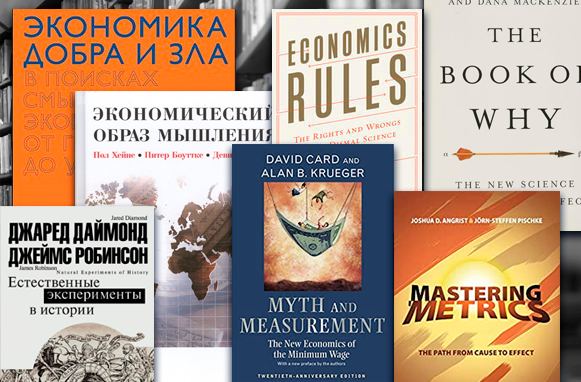
Reading List: How Does Economic Thinking Work?
GURU's new thematic bookshelf has volumes talking about how economists perceive and study the world. NES Professors and alumni give their recommendations and review books from their personal "shelves".
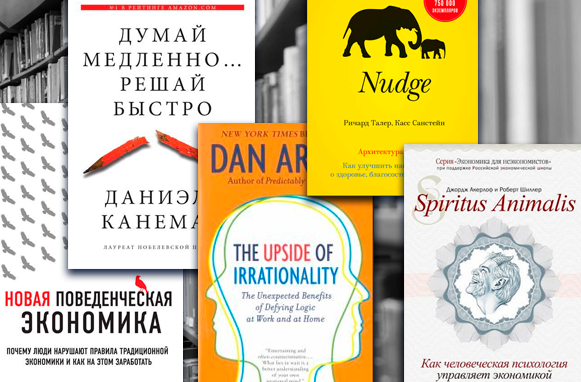
Reading List: Human Economics
Imagine that you are at a casino by the roulette table and black comes up for, say, 20 times in a row. Is there a growing probability that the ball will hit red? Or imagine that you have recently been hired for a new job. What should you compare your salary with – the paycheck of your colleagues or the market average? Would the benchmark change after a year? Would you prefer 10,000 rubles today or 11,000 rubles in a week’s time? And what would be your choice if the delay is 4-5 weeks? Answers to these questions make up behavioral economics.
Books about this branch of economics are probably the most fascinating and easy among books on this science. This is probably due to the fact that they are devoted to people themselves, give us a chance to reflect on the nature of our mistakes and laugh at them. “It seems to be a long Jewish tradition to pass on history and wisdom from one generation to another not through lectures and textbooks, but through anecdotes, funny stories and jokes on the topic.” Amos Tversky, one of the fathers of modern behavioral economics, wrote this in a note a few days before his death.

Reading List: A History of Crises, Financial Madness and Failures
The world is teetering on the brink of a crisis that could turn out to be the most severe economic shock since the Great Depression and could lead to much more significant transformations than those that followed the global financial crisis. We have selected books devoted to crises, mostly taken from the reading lists of representatives of the NES community. These works are about the history of economic shocks, their causes and consequences, about everyone missing the new crisis thinking that "this time is different" but facing the same story over again.
Вопрос-ответ
Что такое тематическая книжная подборка?
Это несколько книг и материалов, собранных вокруг одной темы или вопроса. Подборка дает контекст, показывает разные точки зрения и помогает выстроить последовательность чтения.
Чем «Подборки по темам» отличаются от «Полки от экспертов»?
Тематическая подборка строится вокруг конкретной проблемы или направления. «Полка от экспертов» показывает личный выбор книг конкретного преподавателя, выпускника или приглашенного специалиста.
Какие темы представлены в разделе?
В подборках встречаются экономика и экономический рост, институты, кризисы, неравенство, данные, поведенческая экономика, история, общество и другие направления, которые можно рассматривать через книги.
Кто формирует подборки?
На странице представлены как редакционные и экспертные подборки, так и книжные «полки» читателей GURU.nes.ru. В каждом материале объясняется, почему выбранные книги объединены и какой вопрос они помогают рассмотреть.
Подойдут ли подборки тем, кто только начинает изучать экономику?
Да. Можно начать с темы, которая уже знакома или интересна, и выбрать одну книгу из предложенного списка. Для уточнения базовых понятий параллельно удобно использовать экономический словарь.
Как использовать подборки для самообразования?
Сначала определите тему, затем прочитайте вводное описание и выберите книги разного уровня сложности. После чтения можно дополнить маршрут статьями, подкастами и видео GURU.nes.ru по тому же направлению.
Где посмотреть другие книжные материалы GURU.nes.ru?
Публикации, связанные с Российской экономической школой, собраны в разделе «Книги и издания РЭШ», а персональные рекомендации — на «Полке от экспертов».